
Solar Installation
How to Price a Solar Installation: A Contractor's Guide (2026)
Updated June 2026 | 9 min read
Solar pricing has two layers that contractors need to understand separately: what it actually costs you to install the system (hard and soft costs), and what you charge the customer (sell price with margin built in). Getting both wrong — underpricing jobs or overpricing yourself out of deals — is the fastest way to stall growth.
This guide covers both: the cost-side math every solar contractor should know, and how to build a price the customer will say yes to — ideally in the same conversation where you run the inspection. Whether you're new to the trade or refining your process, understanding how to price a solar installation accurately is the foundation of a profitable solar business.
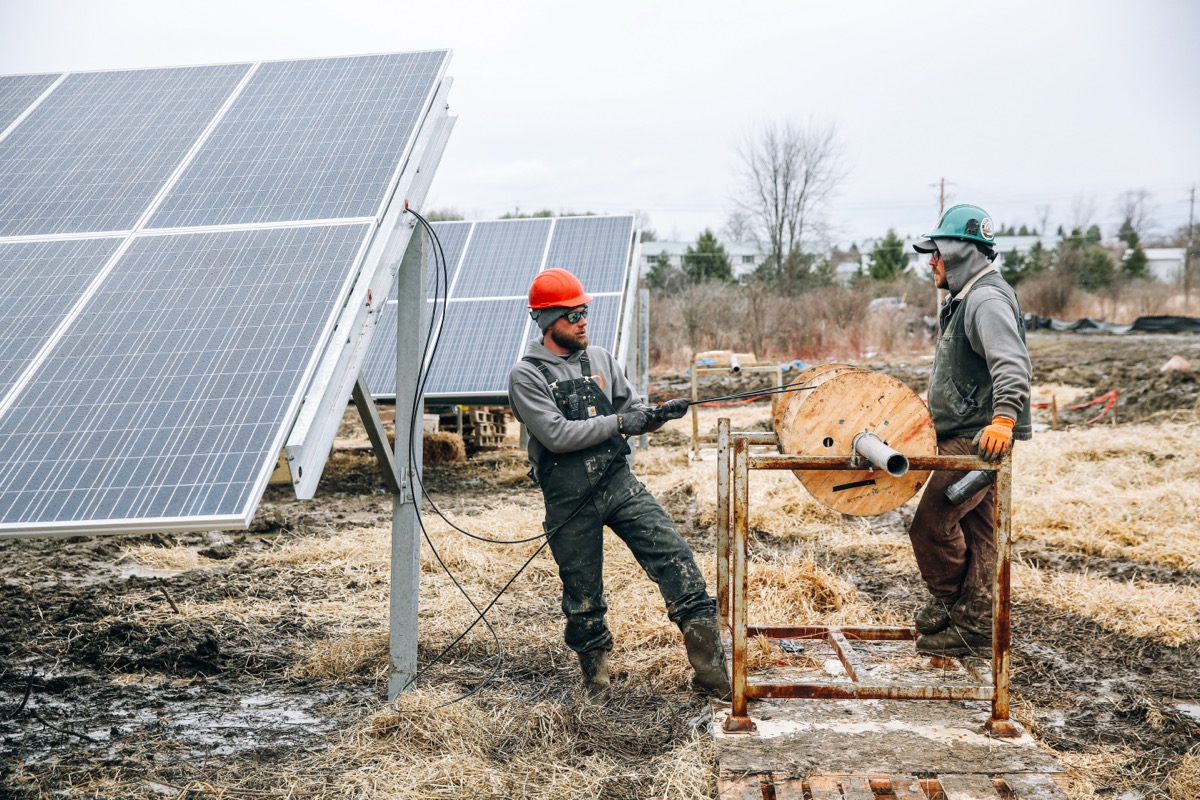
Knowing how to price a solar installation starts with accurate system sizing and a clear cost-per-watt structure.
The Per-Watt Pricing Model
Solar installations are priced and compared in dollars per watt ($/W) of installed system capacity. This makes it easy to compare quotes across system sizes and to track your own cost structure as you scale. The cost per watt figure bundles together every line item — panels, inverter, racking, labor costs, permitting, and overhead — into a single number that travels cleanly across proposals.
The formula:
Total Price = System Size (W) × Price per Watt ($/W)
Net to Customer = Total Price × (1 − 0.30) [after 30% federal ITC]
Example: A 7 kW system at $3.10/W = $21,700 gross. After the 30% federal Investment Tax Credit: $15,190 net cost to the homeowner. Solar incentives like the federal ITC dramatically reduce the effective solar installation cost for homeowners, making this net figure the most persuasive number in your proposal.
2026 Solar Installation Cost Benchmarks (Per Watt)
| Component | Low End | Mid Range | High End |
|---|---|---|---|
| Solar panels (modules) | $0.25/W | $0.35/W | $0.55/W |
| Inverter (string / micro) | $0.15/W | $0.22/W | $0.35/W |
| Mounting / racking | $0.10/W | $0.15/W | $0.22/W |
| Balance of system (wiring, conduit, etc.) | $0.08/W | $0.12/W | $0.18/W |
| Labor (install crew) | $0.30/W | $0.45/W | $0.65/W |
| Permits & inspection | $0.05/W | $0.08/W | $0.15/W |
| Sales & customer acquisition | $0.15/W | $0.30/W | $0.55/W |
| Overhead allocation | $0.15/W | $0.25/W | $0.40/W |
| Total hard + soft cost | $1.23/W | $1.92/W | $3.05/W |
| Gross margin (25–40%) | — | — | — |
| Sell price ($/W) | ~$1.65/W | ~$2.75/W | ~$4.00/W |
The national average residential sell price in 2026 is approximately $2.95–$3.20/W before incentives. Companies at the low end of that range are typically high-volume operations with vertically integrated install crews buying equipment in bulk. The solar panel cost breakdown above shows that labor costs and sales acquisition are often the two biggest variables within your control when trying to improve margin.

A properly sized residential solar array — understanding the full solar installation cost per watt is essential for accurate quoting.
How to Calculate the Right System Size
System sizing is the foundation of accurate pricing. Under-size the system and the customer doesn't offset their bill. Over-size and you've priced yourself out. Nailing the system size kW is the first step in learning how to price a solar installation that both wins the job and delivers the promised savings.
Step 1: Get 12 months of electricity usage
Ask for the utility bill or look it up with the customer's permission. You need annual kWh consumption — not just the most recent month.
Step 2: Find peak sun hours for the address
Peak sun hours vary by geography: Phoenix averages 6.5 PSH, Los Angeles 5.5, Chicago 4.2, Seattle 3.8. Use the address-specific value, not a state average.
Step 3: Calculate the base system size
Example: 12,000 kWh ÷ (5.0 × 365) = 6.58 kW
Step 4: Add production derate factor (10–25%)
Real-world production is lower than nameplate capacity due to shading, soiling, temperature, and inverter losses. Add 15–20% to the base size:
Tools like EasyQuote automate this calculation using the address and utility data, so reps can generate an accurate system size on a tablet at the home in under 5 minutes.
What to Include in a Solar Installation Proposal
A complete solar proposal that converts includes all of these:
- System size (kW) and panel count
- Panel brand, model, and wattage with spec sheet reference
- Inverter type and brand (string, microinverter, or power optimizer)
- Annual production estimate (kWh), with comparison to current usage
- Gross price and net price after 30% federal ITC
- Financing options — present as monthly payment, not just total
- Estimated payback period (gross and net)
- 25-year production guarantee and manufacturer panel warranty
- Workmanship warranty (typically 10 years)
- Permitting and interconnection included statement
- Timeline from signed contract to system live
Permitting and interconnection are costs that newer contractors often underestimate. Permit fees, utility application costs, and the time required to navigate the interconnection process all factor into your true solar installation cost. Build these into your overhead allocation from day one rather than absorbing them as surprises.

Walking a homeowner through a solar proposal — including payback period and solar incentives — builds trust and accelerates close rates.
Gross Margin Benchmarks for Solar Contractors
| Company Type | Typical Gross Margin | Key Driver |
|---|---|---|
| High-volume (100+ installs/mo), own crews | 32–42% | Equipment volume pricing + low install cost/W |
| Mid-market (25–100 installs/mo), own crews | 26–34% | Moderate equipment savings, efficient crews |
| Mid-market, subcontracted install | 20–28% | Subcontractor markup + lower overhead |
| Small installer (<25 installs/mo) | 18–26% | Limited buying power, higher customer acquisition cost |
How Financing Changes the Pricing Conversation
The most common reason solar proposals stall is sticker shock. A homeowner who sees $21,700 and has to figure out financing on their own will pause. A homeowner who sees "$129/month, less than your current electric bill" says yes.
The presentation order matters: lead with the monthly payment, then show the total. Lead with the net price after ITC, not the gross. Lead with what their bill will be after going solar, not what the system costs. When you know how to price a solar installation effectively, you present the payback period and monthly savings before the sticker price — that sequencing wins more deals.
SubcontractorHub includes built-in financing from 10+ lenders (including Goodleap, Lendica, and others) presented directly in the EasyQuote proposal — so the rep never has to go to a separate app or call a finance desk to show the homeowner their monthly payment.
Frequently Asked Questions
How do you price a solar installation?
Solar installs are priced per watt of system capacity. Calculate the system size (kW) from the customer's annual energy usage and local peak sun hours, multiply by your all-in price per watt (which covers equipment, labor, permits, overhead, and margin), then present gross price alongside the net price after the 30% federal ITC.
What is the average cost per watt for solar installation?
The national average is $2.95–$3.20 per watt for residential installations in 2026. This translates to $20,650–$22,400 for a typical 7 kW system before incentives, or $14,455–$15,680 after the 30% ITC.
How do you calculate solar system size for a home?
Divide the customer's annual kWh usage by (peak sun hours × 365), then add 15–20% for production losses. Example: a home using 12,000 kWh/year in a 5-PSH market needs about 7.8–8.0 kW of installed capacity.
What is a good margin for solar installation companies?
Gross margins of 25–35% are typical for well-run residential solar companies. High-volume operations with their own install crews and volume equipment pricing often reach 35–42%. Net profit after overhead typically runs 8–15%.
Generate Accurate Solar Quotes in the Field
SubcontractorHub's EasyQuote generates a complete solar proposal — system size, production estimate, financing options — on a tablet at the homeowner's home, in under 5 minutes.
Book a Demo →SubcontractorHub
See How Top Contractors Close More Jobs
AI proposals, sales pipeline, and project management — all in one platform.
- ✓AI-powered proposals in the field
- ✓CRM built for contractor sales
- ✓Project tracking from sale to install
30 minutes. No commitment.